Two rulebooks apply at once
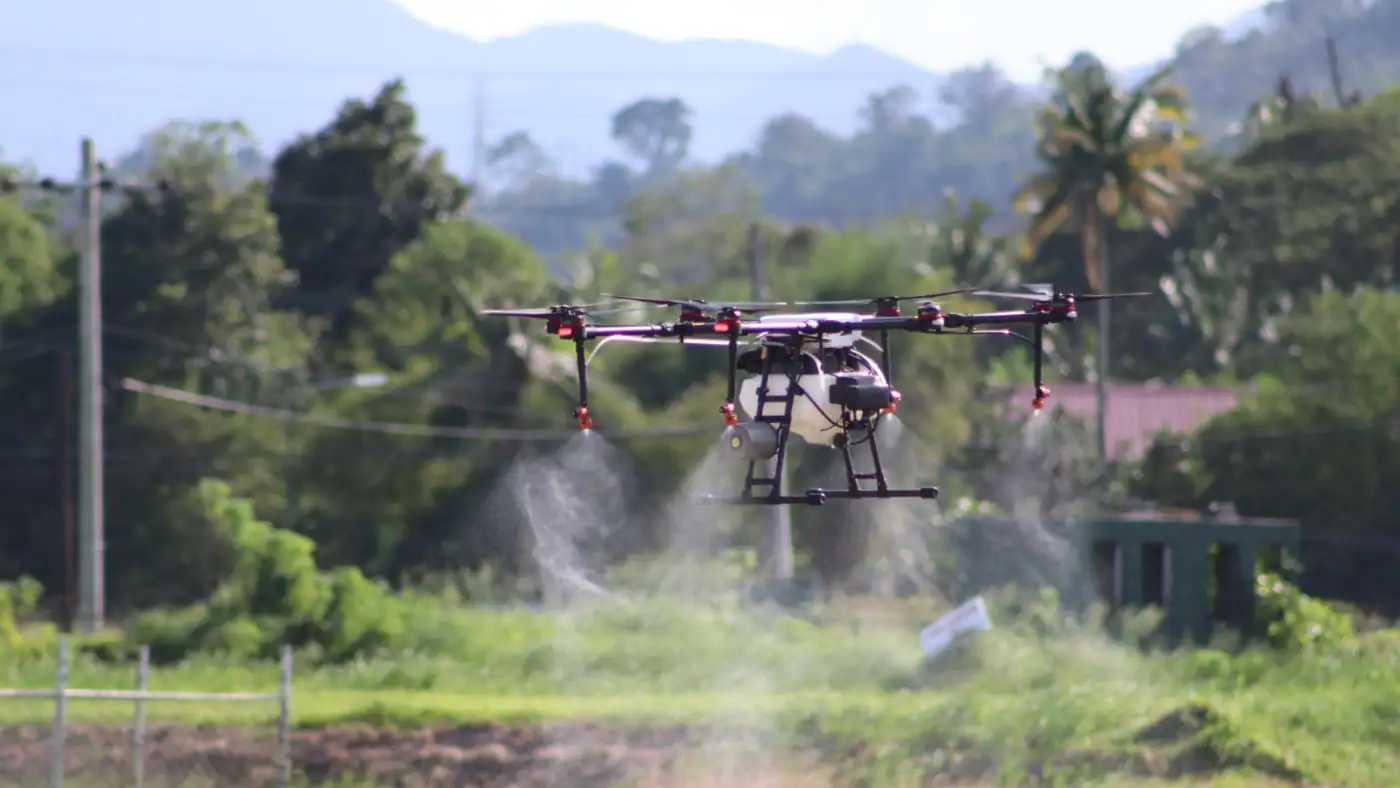
A spraying drone is an aircraft and a pesticide applicator, so two sets of rules apply. The Drone Rules, 2021 issued under the Directorate General of Civil Aviation (DGCA) govern the aircraft, the pilot and the airspace. The Standard Operating Procedure for drone application of pesticides issued by the Ministry of Agriculture and Farmers Welfare governs how the spraying itself is done.
Every operator on Sky Spray is verified against both before they can take a job: a valid Remote Pilot Certificate, a type-certified drone with a UIN, and training on the SOP.
The aircraft and the pilot (DGCA)
- Agricultural spraying drones fall in the small (2 to 25 kg) or medium (25 to 150 kg) category and must be type-certified models registered on the Digital Sky platform with a unique identification number (UIN)
- The pilot needs a Remote Pilot Certificate from a DGCA-approved training organisation for that category
- Flights are allowed in green zones without permission; yellow zones (near airports and some other areas) need permission through Digital Sky; red zones are prohibited
- Daylight only, within visual line of sight, below 120 metres (spraying happens at 2 to 3 metres, far below that)
- No flying over people, dwellings, public roads or gatherings
The spray operation (the SOP)
| Parameter | What the SOP requires |
|---|---|
| Height above crop | 1.5 to 3 metres for most crops; 3 to 4 metres for sugarcane and tall crops |
| Wind speed | Not above about 15 km/h; no spraying in gusty conditions |
| Time of day | Early morning or late afternoon; avoid the hot, windy middle of the day |
| Spray volume | Roughly 5 to 10 litres of mix per acre depending on crop and product |
| Products | Only formulations approved for drone application, at the registered dose |
| Buffer zones | Kept from water bodies, houses, sensitive crops and beehives as the label and SOP require |
| Field marking | The area to be sprayed is defined before the flight and recorded |
| Personal protection | Gloves, mask and covered clothing for the pilot and helper during mixing and refilling |
What the farmer is responsible for
- Buying an approved product and telling the operator what it is and what crop it is for
- Clearing the field of people and livestock before the flight, and keeping them out until the label's re-entry interval has passed
- Telling the operator about overhead power lines, trees, wells, beehives and neighbouring crops
- Informing neighbours if a drift-sensitive crop is next door, particularly for herbicides
- Respecting the pre-harvest interval on the label before picking
Sky Spray's safety guidelines set out both sides' responsibilities in more detail, and a job cannot be marked complete in the app until the operator has uploaded the flight track and photos of the sprayed area.
If something goes wrong
Drift damage to a neighbouring crop, chemical exposure, or an unsafe flight should be reported to the operator and to the platform immediately so it can be investigated while the evidence is fresh. Serious incidents involving injury or property damage may also need to be reported to the DGCA under the Drone Rules. The safety desk in the app and on the contact page handles reports.
Sources
- Drone Rules, 2021 and Digital Sky (DGCA)
- Ministry of Agriculture: SOP for drone application of pesticides
- Crop-specific SOPs for drone spraying (Farm Machinery Training and Testing Institute, Budni)
Scheme amounts, approved lists and rules change. This guide was last revised on 2026-09-26; check the official source before acting on a figure.